
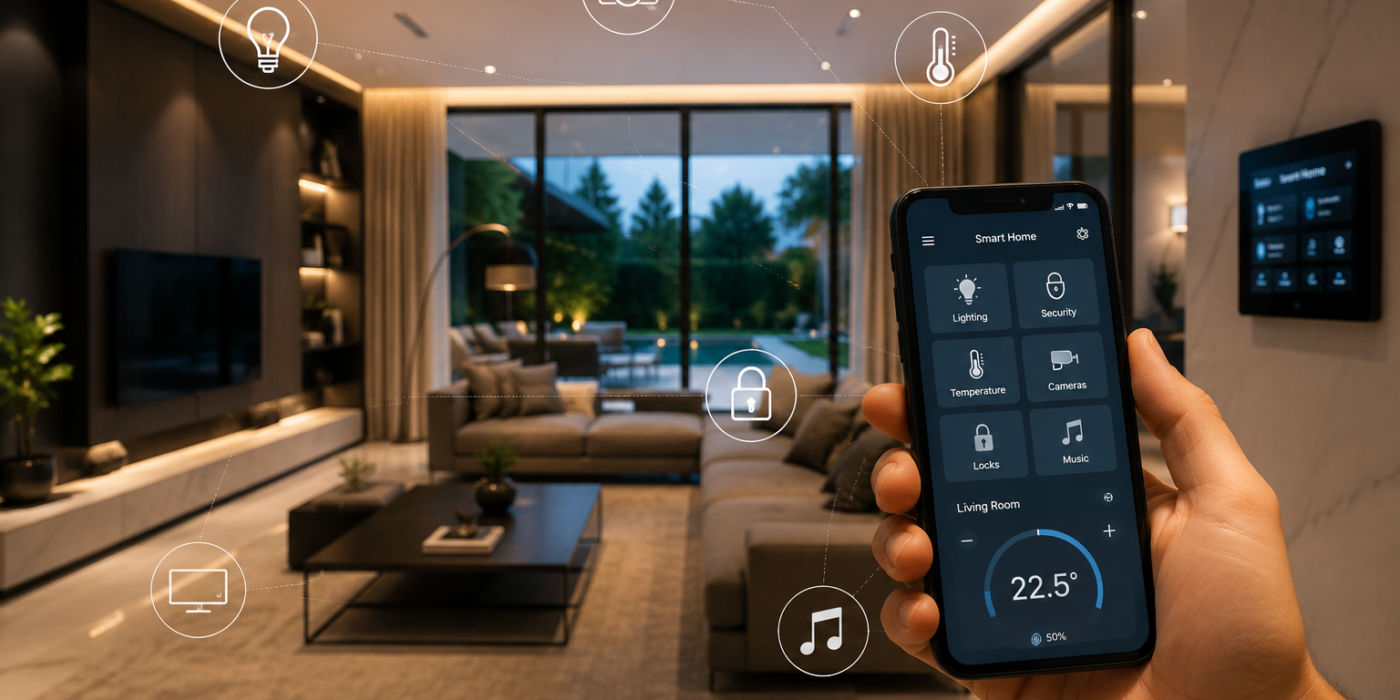
A modern home is no longer just a place to live—it has become a complete lifestyle experience that combines comfort, security, efficiency, and technology.
As smart home technologies continue to evolve, the way buyers and investors evaluate properties is changing significantly. Today, the decision is no longer based only on location or space, but also on how technology can improve everyday life and enhance long-term property value.
This is why smart homes have become one of the most influential trends shaping the future of modern living.
What Is a Smart Home?
A smart home is a residence equipped with advanced digital technologies that allow homeowners to control various systems automatically or remotely.
These systems may include:
- Smart lighting
- Climate control systems
- Security and surveillance systems
- Smart locks
- Internet-connected home appliances
These technologies can usually be controlled through smartphones, smart devices, or voice assistants.
How Do Smart Home Systems Work?
Smart home systems typically rely on modern connectivity technologies such as:
- Internet connectivity
- Wireless networks
- Sensors
- Automation systems
These technologies connect devices within the home, allowing them to communicate and perform automated actions.
For example, a smart home system can:
- Turn on lights when you enter the house
- Automatically adjust room temperature
- Send security alerts when unusual movement is detected
- Turn off unused devices to save energy
Key Smart Home Technologies
Smart Lighting
Smart lighting systems allow users to control brightness and timing based on preferences, schedules, or room occupancy, improving both comfort and energy efficiency.
Smart Security Systems
These systems often include:
- Cameras
- Alarm systems
- Motion sensors
- Smart locks
They enhance safety and provide better control over access and monitoring.
Smart Climate and Energy Control
These technologies help optimize energy consumption by automatically adjusting temperature and managing electrical usage more efficiently.
Smart Appliances
Examples include:
- Smart refrigerators
- Smart TVs
- Voice assistants
- Connected washing machines
These devices create a more convenient and seamless daily living experience.
What Are the Benefits of Smart Homes?
Smart homes are becoming increasingly attractive to buyers for several important reasons.
Greater Convenience
Residents can control multiple home systems quickly and easily from almost anywhere.
Better Security
Real-time monitoring and instant alerts improve overall home security and peace of mind.
Improved Energy Efficiency
Smart systems reduce unnecessary energy consumption and help lower utility costs.
Time and Effort Savings
Automation reduces repetitive daily tasks and simplifies home management.
Do Smart Homes Increase Property Value?
Technology has become an increasingly important factor in modern real estate valuation.
Properties equipped with smart home technologies often achieve:
- Higher buyer demand
- Greater market appeal
- Stronger resale value
- Competitive advantage
As a result, many investors now view smart home features as part of a property’s long-term value.
Why Is Demand for Smart Homes Growing in Modern Communities?
As cities and residential communities continue to evolve, buyer expectations are rising.
Today’s buyers increasingly look for projects that offer:
- Modern technology
- Integrated services
- Enhanced security
- Better accessibility
- More advanced lifestyle experiences
This is why smart homes are becoming more closely associated with modern residential developments and premium communities.
You can also explore:
Lifestyle in Sheikh Zayed: How Clubs and Services Influence Living and Investment Decisions
The Developer’s Role in Delivering Smart Homes
Smart home living is not only about devices—it begins with the vision of the real estate developer.
A forward-thinking developer focuses on:
- Strong technological infrastructure
- High-quality systems
- Future scalability
- Integration of technology with lifestyle
This makes the developer a key factor in creating future-ready living experiences.
You can also read:
How to Choose a Trusted Real Estate Developer and Why It Matters for Your Investment
The Future of Living Is Becoming Smarter
As technology continues to advance, smart homes are expected to become a standard part of modern living.
The future of housing will no longer depend only on location or size, but also on how effectively a home can provide comfort, security, and efficiency.
At Karnak Real Estate Developments, we believe the future of real estate depends not only on location and design, but also on smart solutions that improve quality of life and enhance long-term investment value.
If you are looking for a project that combines modern living with future-ready innovation, contact us to discover our latest developments.
FAQs – Frequently Asked Questions
What is a smart home?
A smart home is a house equipped with digital technologies that allow remote or automated control of various home systems.
Do smart homes save energy?
Yes. Smart home systems help optimize energy usage and reduce unnecessary consumption.