
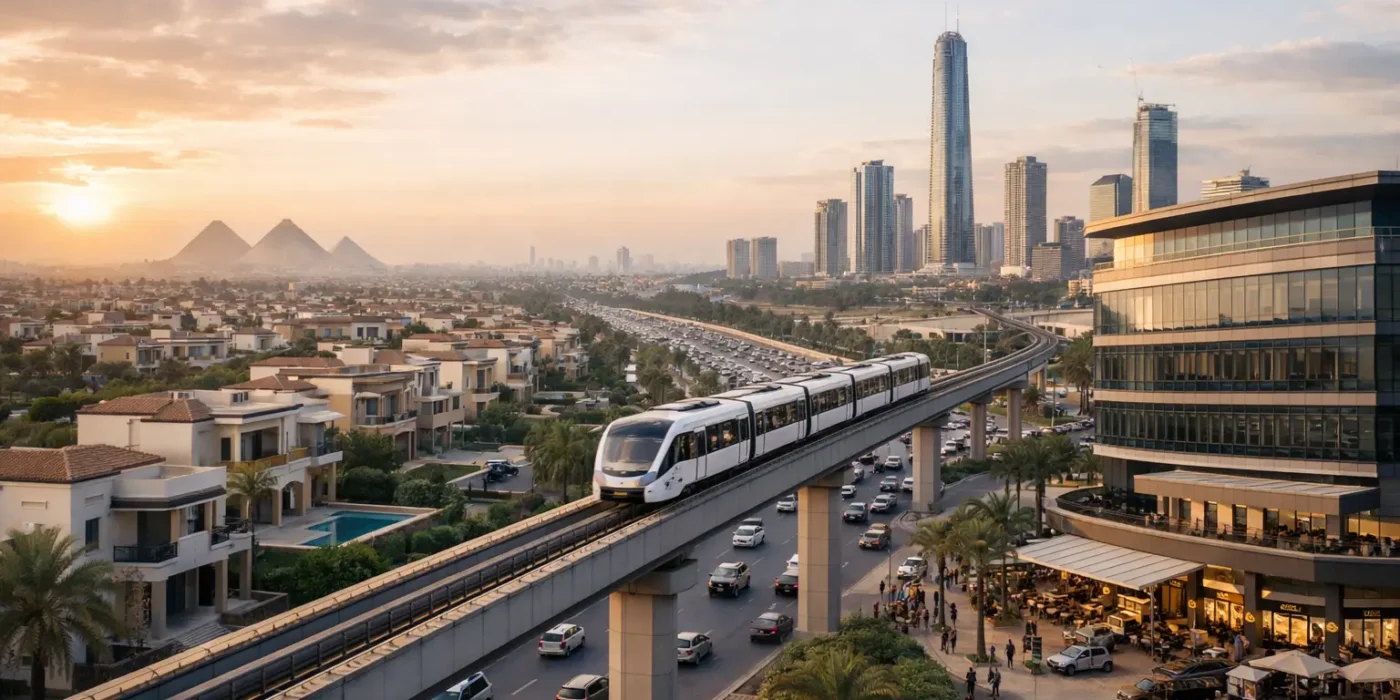
As 2026 begins, more serious buyers and investors are asking an important question: is real estate in Egypt still a safe investment?
This question matters because of several overlapping factors: regional uncertainty that has pushed capital toward tangible assets, ongoing inflationary pressure despite its relative decline, and a shift in buyer behavior as people become more focused on long-term value.
Many believe that real estate in Egypt can still serve as a strong store of value over the long term. However, what makes a property “safe” depends on the location, the type of project, and the credibility of the developer.
Why Is This Question Becoming More Important in 2026?
After several years of financial turbulence, with the local currency intersecting with high inflation, Egyptian real estate emerged in 2025–2026 as a store of value compared to cash savings.
A report by the Real Estate Developers Association explained that 2025 was a year of repositioning rather than slowdown, as the market showed notable resilience in the new urban communities of East and West Cairo.
The association expected the sector to enter a more mature and stable phase in 2026, supported by improving confidence and a clearer economic outlook.
At the same time, regional tensions pushed capital toward more stable markets, which allowed Egypt to benefit as a relative safe haven, supported by its large population base and genuine demand for housing and rentals. This interest is growing especially in key expansion hubs such as Sheikh Zayed and New Cairo.
What Makes Real Estate Appear Safe in Egypt Today?
Before going into the details, it is important to understand that the safety of real estate does not depend on a single factor. It comes from being a tangible asset that can withstand currency volatility and inflation, while also benefiting from real demand for housing, rentals, and commercial facilities, in addition to infrastructure that supports long-term location value. For that reason, property is often seen as a more stable option than some other investment vehicles.
Protection Against Monetary Pressure and Inflation
Although inflation in Egypt declined from 28.3% in 2024 to an average of 14.1% in 2025, it is still high enough to affect purchasing power. Investors often see holding real estate assets as a way to resist monetary erosion, since property can generate recurring rental income that adjusts over time as prices rise.
Data from the Central Bank indicates that residential real estate in Greater Cairo generates annual yields ranging between 6% and 8%, which makes it a potential long-term hedge against inflation. Even so, it is important to stress that real estate is not risk-free, and value preservation still depends on location quality and the type of unit.
For those who want a more precise understanding of the West Cairo market, it is worth referring to the article “Price per Square Meter in Sheikh Zayed 2026 — Neighborhood & Prices” to explore average prices, differences between districts, and the factors that shape both purchasing and investment value.
Genuine Demand for Housing, Rentals, and Commercial Use
Reports indicate that demand remains strong for residential, commercial, and tourism-related units across Greater Cairo, with growing demand for mid-sized and smaller units due to affordability considerations.
An article by Diar Developments in Daily News explained that regional tensions have increased demand for rental properties in major cities and new urban communities, strengthening returns and reinforcing real estate’s position as an income-generating asset.
This demand is not limited to residential use. Areas such as New Cairo and Sheikh Zayed are also seeing rising interest in commercial and administrative spaces to support business and service needs.
Infrastructure and Urban Expansion
The state continues to support development projects that raise location value over the long term. In March 2026, President Abdel Fattah El-Sisi inaugurated the East Nile Monorail project linking Cairo to the New Administrative Capital. The project marks a major step in green transport and is designed to improve mobility while supporting broader urban expansion plans.
According to the Minister of Transport, the monorail consumes 30% less energy than other electric traction systems and helps reduce traffic congestion because it runs on an elevated route that does not occupy road space. This type of infrastructure tends to strengthen confidence in connected areas and improve their investment appeal.
Why Do Some Buyers Still Remain Cautious?
Despite real estate’s appeal as a relative safe haven during volatile periods, the decision to buy still requires caution. Today’s buyer is not only thinking about preserving value, but also weighing economic pressure, financing costs, and project reliability before taking any step.
Inflation Is Below Its Peak, but Still Influential
Lower inflation does not mean the pressure is over. Central Bank data shows that annual inflation in January 2026 reached 11.9% for headline inflation and 11.2% for core inflation. The Bank expects inflation to remain stable in the first quarter before moving toward its target of 7% ±2% by the end of 2026. This means household purchasing power is still under pressure, which makes some buyers hesitate.
Financing Is Improving, but Still Expensive
On February 12, 2026, the Central Bank of Egypt cut key interest rates by 100 basis points, bringing the overnight deposit rate to 19% and the overnight lending rate to 20%, while also reducing the reserve requirement ratio for banks from 18% to 16%.
Although these cuts reflect a shift toward easing, financing costs remain high compared with the pre-2024 period. This makes payment plans and installment structures a critical part of any buying decision.
Not Every Project Offers the Same Level of Safety
Reports warn against treating all projects as equal. The “natural selection” that took place in 2025 distinguished between committed developers and others. Daily News noted that investors have become more focused on developer reputation and delivery track record, viewing the developer’s name not merely as a marketing tool, but as a layer of investment protection.
That is why buyers should assess factors such as project location, service level, design concept, and the logic of resale or rental demand before making a decision.
Before making a final decision, it is also worth reading “What Is the Best Time to Buy Property in Egypt? A Practical Decision Guide for Buyers” to better understand how to time your purchase according to the market, your needs, and your investment goals.
Is Real Estate in Egypt Still a Safe Investment in 2026?
Yes, but it is safe selectively, not automatically. The safest opportunities are usually linked to the following:
- Strong locations: Well-planned, well-connected areas such as Sheikh Zayed and New Cairo that benefit from infrastructure and urban growth.
- Trusted developers: Companies with a clear delivery record, solid financial standing, and a sustainable operating model.
- Practical units: Residential units with efficient layouts and usable sizes, or commercial units in active areas with clear rental or usage potential.
- Reasonable payment plans: Flexible installment systems that suit high-interest-rate conditions without depending on short-term speculation.
- Real end-user or tenant demand: Making sure there are actual residents or tenants, because property value is driven by real demand, not speculation alone.
What Should Buyers Review Before Investing?
Before making an investment decision, it is not enough to rely on the idea that real estate is inherently safe. A successful purchase depends on reviewing a set of practical factors that determine the strength of the project, its demand potential, and its ability to generate returns or preserve value over time.
A Trusted Developer with a Clear Delivery Record
Choosing the right developer is half the path toward a safe investment. Buyers should review the company’s history of project delivery, its commitment to timelines, and the quality of its completed developments. Karnak Real Estate Development focuses on commitment and quality across its projects, and investors can review its residential and commercial track record for reassurance.
A Location with Real Daily Demand
A successful location is one that attracts users on a daily basis. For example, Sheikh Zayed is considered a mature residential destination with sustained demand from families, while New Cairo continues to attract businesses and shoppers thanks to its population density and integrated infrastructure. Choosing a location close to transport routes and services increases resale and rental potential.
Unit Types That Match Today’s Buyer Behavior
The market is increasingly shifting toward mid-sized and smaller units due to affordability and changing household patterns. Practical units include moderately sized apartments, duplexes for smaller families, and commercial units in mixed-use areas. Oversized or luxury units that depend on exceptional demand should generally be approached with caution unless there is a very clear plan behind the purchase.
A Clear Resale or Rental Logic
Before buying, an investor should ask: can this unit realistically be rented out? Is there genuine end-user demand? Will the location improve over time? Positive answers to these questions support the investment case. Current rental yields of 6% to 8% in Greater Cairo offer a helpful benchmark for evaluating future returns, but these should still be compared against bank certificate returns and the risks associated with each alternative.
What Does This Mean for Sheikh Zayed and New Cairo in 2026?
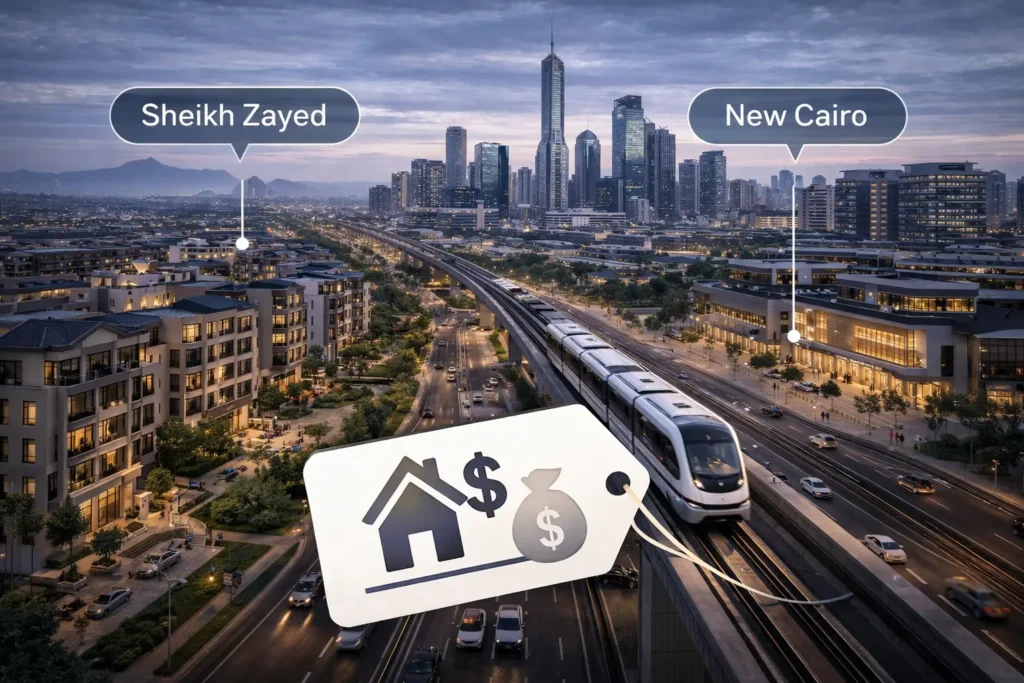
When looking at investment opportunities in 2026, Sheikh Zayed and New Cairo stand out as two strong options, but each offers different advantages. Because demand varies between residential and commercial property, understanding the nature of each area is essential for evaluating the opportunity properly.
Sheikh Zayed
Sheikh Zayed is widely seen as a mature West Cairo destination that combines calm living, strong services, and a road network connecting it to central Cairo. The market there is driven by real demand from families and individuals looking for a complete residential environment. Belva, Karnak’s residential project in Sheikh Zayed, offers apartments and duplexes in a prime location, benefiting from sustained demand for family housing.
New Cairo
New Cairo continues to stand out as a hub for commercial activity and mixed-use development, with growing numbers of administrative projects and modern malls. Vitali Mall, launched by Karnak in New Cairo, reflects the logic of investing in areas with strong density and purchasing power. Its proximity to major roads, Future University, and business districts strengthens both rental value and resale potential.
Karnak’s View: How We Think About Safe Investment in 2026
Karnak Real Estate Development believes that the idea of safe investment is not simply about buying early or expecting prices to rise. Instead, it is built on three core pillars:
- Strategic locations: Choosing areas connected to infrastructure and population growth, such as Sheikh Zayed and New Cairo, where the monorail and new road networks support long-term value appreciation.
- Practical investment thinking: Focusing on rental yields and the total cost of ownership, not only on the initial purchase price. Current yields of 6% to 8% offer an indicator of an asset’s ability to resist inflation.
- Buyer-oriented planning: Designing units and payment plans that fit the needs of end users, with an emphasis on practical spaces and services that improve rentability.
Through these pillars, Karnak aims to deliver projects that combine livability, practical functionality, and long-term investment value.
Final Verdict
Real estate in Egypt remains a strong investment option in 2026, provided buyers stay disciplined in how they choose. The market rewards buyers who rely on analysis and research, not emotion. The best decisions are those directed toward assets supported by a strong location, real demand, and a trusted developer capable of execution.
If you are following market movements and looking for decisions based on up-to-date information, you can visit the Karnak blog to explore the latest real estate news, market insights, and trends that may affect buying and investment decisions in 2026.
FAQs
Is real estate in Egypt a good investment in 2026?
Yes, provided the right location and developer are chosen, and the unit matches real market demand while offering flexible payment plans.
Why is real estate considered safer than some other assets?
Because it is a tangible asset that can generate rental income and preserve value. It can also help resist inflation, although each case still needs to be assessed individually.
Which areas are attracting buyers in 2026?
Sheikh Zayed, New Cairo, the New Administrative Capital, and coastal cities such as New Alamein are all attracting attention because of infrastructure growth and rising demand.
Is Sheikh Zayed a good place to buy property now?
Yes. It is a mature West Cairo destination with sustainable residential demand, and it includes projects such as Belva residential units that offer practical spaces for families.
Does New Cairo remain strong for commercial investment?
Yes. It remains a major hub for commercial activity and retail, and Vitali Mall is an example of commercial investment in a densely populated area with continuous movement.