

Before buying a property, one question naturally comes to mind: what if something unexpected happens to the developer? What if construction slows down, stops, or the company fails to meet its obligations?
This is not a pessimistic question. It is a responsible one — and it reflects the mindset of a buyer who understands that a property purchase is both a lifestyle decision and a long-term financial commitment.
Real estate remains one of Egypt’s most trusted long-term investment vehicles, especially for buyers looking for capital protection, future value growth, and a tangible asset they can use, lease, or pass on.
Yet the smartest buyers are not only those who compare locations, prices, and payment plans. They are the ones who understand the legal framework behind the purchase before signing any contract.
In a market filled with new projects, flexible offers, and different types of developers, knowing your rights is no longer optional. It is a key part of protecting your investment.
The Legal Framework Protecting Property Buyers in Egypt
Egyptian law does not leave property buyers without protection when problems arise between them and a developer. The buyer’s position is usually shaped by three key elements: the contract, the developer’s legal status, and the regulatory approvals connected to the project.
That is why the strength of your legal position begins long before any dispute occurs. It starts with verifying the developer, reviewing the project’s approvals, understanding the payment structure, and making sure your contract clearly states what you are buying, when it will be delivered, and what happens if either party fails to meet its obligations.
Regulatory Oversight: Your First Layer of Protection
In properly structured developments, regulatory oversight plays an important role in protecting buyers. Competent authorities such as the New Urban Communities Authority and other relevant government bodies may be involved in land allocation, project approvals, planning permissions, construction licensing, and the general legal framework surrounding the development.
- Licensed developers are expected to operate within approved legal and planning frameworks.
- Project approvals help confirm that the development is not being marketed informally or without proper basis.
- Buyers may have stronger documentation when the project is linked to official approvals and recognized authorities.
- Regulatory bodies can play a role in reviewing complaints, violations, or delays depending on the project type and jurisdiction.
- Project-specific financial controls and dedicated accounts are becoming increasingly important in off-plan real estate transactions.
The key takeaway is simple: the more organized, documented, and officially recognized the project is, the stronger the buyer’s position becomes if a problem arises later.
Contract Guarantees: What Your Agreement Should Clearly Include
Your contract is the first and most important document protecting your rights. If a disagreement happens later, the contract becomes the primary reference point for the buyer, the developer, legal advisers, and, where necessary, the courts.
A strong contract should never rely on vague promises or verbal assurances. It should define the unit, the payment plan, the delivery date, the specifications, the penalty mechanisms, and the buyer’s rights if the developer fails to deliver.
| Clause | What the Contract Should Include | Why It Matters |
| Delivery Date | A clear month and year for handover | Creates a basis for delay claims or remedies |
| Technical Specifications | Detailed description of area, finishes, materials, and layout | Helps ensure the buyer receives what was agreed |
| Payment Schedule | Documented instalments linked to a clear timeline or project stage | Protects the buyer from unclear or excessive upfront payment risk |
| Termination Clauses | Refund rules, penalties, grace periods, and default procedures | Clarifies what happens if either party fails to perform |
| Structural Protection | Reference to applicable legal guarantees for serious structural defects | Provides post-handover protection in cases covered by law |
What Actually Happens If a Developer Goes Bankrupt or Stops Work?
Full bankruptcy among established developers is not the most common scenario, but delays, stalled work, liquidity pressure, and delivery disputes can happen in any real estate market.
The important question is not only whether a problem can happen, but whether the buyer has the right documents and legal tools to respond effectively.
When a project slows down or appears to stop, buyers should avoid relying on informal updates alone. A clear paper trail, formal communication, and legal documentation are essential.
The Legal Steps Available to the Buyer
If a buyer suspects that a developer is not meeting its obligations, there are several steps that may be taken depending on the contract, the project status, and the legal advice received.
- Send a Formal Legal NoticeThe buyer can issue an official legal notice requesting that the developer resume work, clarify the delay, or provide a binding timeline. This creates a documented record that may support later action.
- Submit a Complaint to the Relevant AuthorityWhere applicable, the buyer may submit a formal complaint supported by the contract, payment receipts, written correspondence, and any evidence of delay or non-performance.
- File a Court ClaimIf the dispute cannot be resolved, the buyer may seek legal remedies through the Egyptian courts, including claims for refund, compensation, or enforcement of contractual obligations, depending on the contract and facts of the case.
- Participate in Creditor ProceduresIf the developer enters formal insolvency or liquidation proceedings, the buyer may need to register their claim and participate in the legal process as a creditor.
- Use Arbitration If the Contract Requires ItSome contracts include arbitration clauses. If so, the dispute may be referred to an agreed arbitration center rather than ordinary courts.
Never underestimate the value of documentation. Keep every official receipt, bank transfer record, signed document, email, message, brochure, payment schedule, and contract appendix. In any legal dispute, what you can prove matters more than what was verbally promised.
Refund Procedures: What the Law and Contract Usually Depend On
Refund rights are usually determined by the contract, the reason for termination, the delay period, the developer’s legal status, and the applicable regulatory framework. In structured off-plan projects, recent regulations have placed greater emphasis on project-specific accounts, developer obligations, and buyer remedies in cases of delayed handover.
However, buyers should never assume that refunds are automatic or immediate. To strengthen your position, you need three things: a properly drafted contract, official payment receipts, and a developer operating within a recognized legal framework.
Licensed Developer vs Unknown Developer: The Difference That Can Cost You Everything
Many buyers are attracted to unusually low prices, flexible payment promises, or projects promoted by lesser-known entities. The risk is that a low entry price can come with a much higher legal cost later.
A licensed and properly documented developer is not only selling a unit. They are operating within a framework of accountability. An unlicensed or poorly documented developer may offer attractive terms, but the buyer may later discover that the project lacks the approvals, documentation, or registration pathway needed to protect their rights.
A Clear Comparison: Licensed or Unlicensed?
The difference between a licensed developer and an unknown developer is not simply a matter of paperwork. It affects enforceability, registration, payment safety, dispute resolution, and the buyer’s ability to rely on the contract if things go wrong.
| Criteria | Licensed Developer | Unlicensed or Unknown Developer |
| Government Oversight | ✓ Operates within recognized approval frameworks | ✗ May operate outside proper oversight |
| Project Accounts | ✓ More likely to follow structured project-account requirements where applicable | ✗ No clear assurance on how buyer funds are managed |
| Protection During Delays | ✓ Buyer may have clearer contractual and regulatory remedies | ✗ Remedies may be limited, unclear, or difficult to enforce |
| Unit Registration | ✓ Stronger pathway toward documentation and registration | ✗ Registration may be delayed, disputed, or impossible |
| Structural Liability | ✓ Subject to applicable legal obligations for serious structural issues | ✗ Legal protection may be harder to enforce in practice |
| Litigation Position | ✓ Stronger documentation before courts or dispute bodies | ✗ Contracts may be weak, incomplete, or harder to rely on |
Before buying, verify the developer’s legal status, project approvals, land documentation, contract structure, and registration pathway. This simple step can save you years of uncertainty, delay, and legal stress.
Why Karnak Real Estate Development Is a Safer Choice in the Egyptian Market
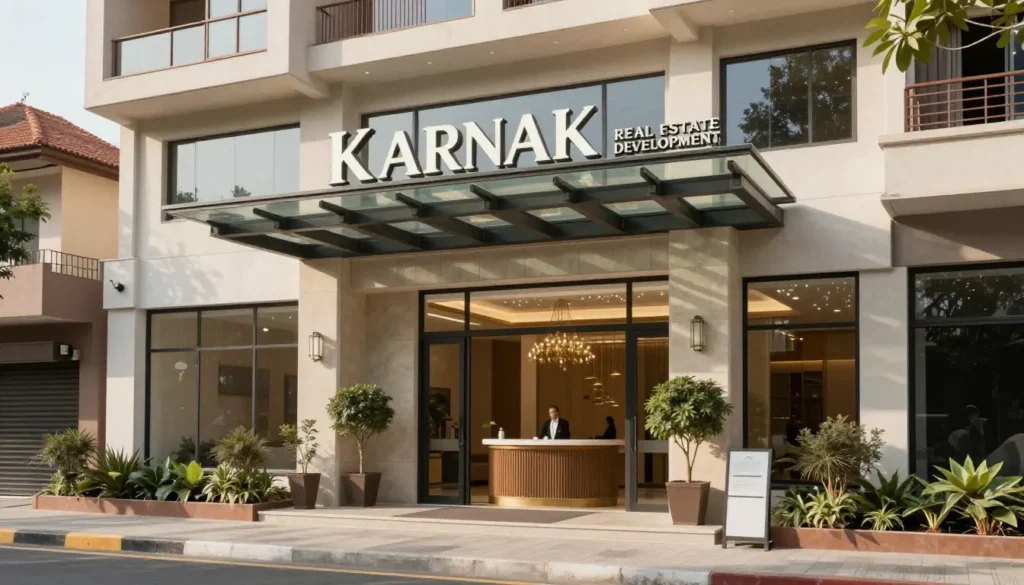
After understanding the legal risks, the real question becomes: how do you choose a developer that combines legal compliance, delivery experience, transparent contracts, and a long-term commitment to buyers?
The answer begins with choosing a developer that treats trust as a business principle, not a marketing slogan. Karnak Real Estate Development has built its presence in the Egyptian market on commitment, planning, delivery discipline, and customer confidence.
Karnak’s approach is grounded in clarity from the first conversation. Buyers are encouraged to understand the project, review the documents, ask legal questions, compare payment plans, and make an informed decision before signing. This is the difference between a sales-driven transaction and a relationship built on transparency.
A developer with a long-standing presence and a clear corporate profile.
التزام موثَّق بجداول التسليم الزمنية
Clear terms that define the unit, payment plan, delivery obligations, and buyer rights.
Official payment methods and documented transactions for stronger buyer protection.
Karnak believes that trust is not built through promises alone. It is built through documentation, open communication, and a buyer journey where every step can be explained clearly. From project details to contract clauses, the company’s team helps buyers understand what they are signing and why each point matters.
Belva Compound — Sheikh Zayed: A Residential Investment Backed by Clarity

When buyers search for premium properties in Sheikh Zayed, they are not only looking for a beautiful home. They are also looking for a secure investment, a reliable developer, and a project that combines lifestyle value with legal and contractual clarity.
This is where Belva Compound by Karnak stands out. Belva is not positioned as another residential project with attractive visuals. It is designed as a balanced living environment where architecture, greenery, privacy, facilities, and investment logic work together.
Belva — Where Lifestyle Quality Meets Investment Confidence
Belva Compound in Sheikh Zayed is located in one of West Cairo’s most desirable residential zones. The project brings together contemporary architecture, wide green areas, carefully planned residential buildings, and a calm compound environment that supports both everyday living and long-term property value.
For buyers, Belva’s value is not only in its location or design. It is also in the clarity of the purchase journey. Every serious buyer needs to understand the unit details, payment plan, delivery obligations, and documentation process before committing — and that is where working with an established developer becomes essential.
Sheikh Zayed remains one of Greater Cairo’s strongest real estate destinations because it combines residential demand, infrastructure, accessibility, schools, commercial services, and long-term investment appeal. Belva adds to that equation by offering a project that feels calm, livable, and carefully planned — not simply another high-density development.
| Type | Area (m²) |
|---|---|
|
1 Bedroom
Typical / Ground
|
86 m² |
|
2 Bedrooms
Typical / Ground
|
115–139 m²
(115, 124, 131, 139) m²
|
|
3 Bedrooms
Typical / Ground
|
171–200 m²
(171, 179, 200) m²
|
| Duplex | 267 m² |
Note: Prices may vary by floor, view, and finishing. Please contact our sales team for latest availability.
Vitali Mall — A Commercial Investment with a Stronger Framework

Karnak’s strength is not limited to residential development. The company also brings the same commitment to planning, documentation, and long-term value into the commercial real estate sector through Vitali Mall.
Commercial property buyers and tenants have different priorities from residential buyers. They need location strength, visibility, footfall potential, flexible spaces, operational management, and a clear contractual framework. A commercial unit is not only a space — it is an income-generating asset that depends on planning, execution, and professional management.
Vitali Mall — Where Commercial Opportunity Meets Legal Clarity
Vitali Mall in New Cairo is one of Karnak’s key commercial projects. Located near the American University in Cairo, the project is designed as an open-air commercial destination that serves retail, dining, services, and lifestyle needs in a high-demand area.
For investors, Vitali offers more than a commercial unit. It offers a structured opportunity supported by a developer with experience, documented processes, and a clear understanding of what commercial property buyers need: visibility, accessibility, operational planning, and contractual confidence.
Vitali Mall is designed for investors who want commercial exposure in a managed, well-positioned environment. As with Karnak’s residential projects, the focus is not only on selling space, but on creating an asset that can function, attract users, and retain value over time.
Final Word: Invest with Awareness, Choose with Confidence
Property buyer rights in Egypt are not just legal concepts written in contracts. They are practical protections that become stronger when the buyer chooses the right developer, signs the right contract, keeps the right documents, and verifies the project before paying.
The developer you choose determines how strong your position will be if anything goes wrong. With a licensed, transparent, and experienced developer, your rights are easier to understand, document, and enforce. With an unknown or poorly documented developer, even a lower price can become an expensive risk.
Karnak Real Estate Development, through projects such as Belva and Vitali, offers buyers and investors a more secure path: carefully planned developments, transparent communication, clear documentation, and a long-term commitment to the people who choose to invest with the company.
Buy with Confidence — Choose a Developer You Can Verify
Do not leave your property investment to assumptions. Speak with Karnak’s team and discover how a transparent purchase journey can make every step clearer, safer, and more reassuring.
Questions That Protect Your Investment
Is the contract officially documented and reviewed before signing?
Yes. Karnak works through clear contracts that are reviewed with the buyer before signing. The contract explains the unit details, price, payment plan, delivery commitments, and the rights and obligations of both parties. Buyers are encouraged to understand every clause and may consult an independent legal adviser before completing the purchase.
Is the delivery date clearly stated, and what happens if there is a delay?
The delivery date is not treated as a verbal promise. It is stated clearly in the unit contract or contractual appendix according to the selected unit and project phase. Any penalties, grace periods, or procedures linked to delay are governed by the written contract, which remains the legal reference for both parties.
Are there official payment channels for buyer instalments?
Yes. The payment mechanism and approved payment channels are clarified before contracting. Buyers are not asked to make payments through informal routes. Every payment should be supported by proper documentation, which is essential for legal and financial clarity.
What financing or payment options are available?
Karnak offers flexible payment plans depending on the project, unit type, phase, and availability. Some Belva units may include flexible down-payment options and extended instalment periods, subject to availability and approval.
Can I review Karnak’s previous projects before buying?
Yes. Buyers are encouraged to evaluate a developer through real history, not promises alone. Karnak Real Estate Development has been active since the early 1990s and has delivered thousands of residential and commercial units across a significant built-up area.