
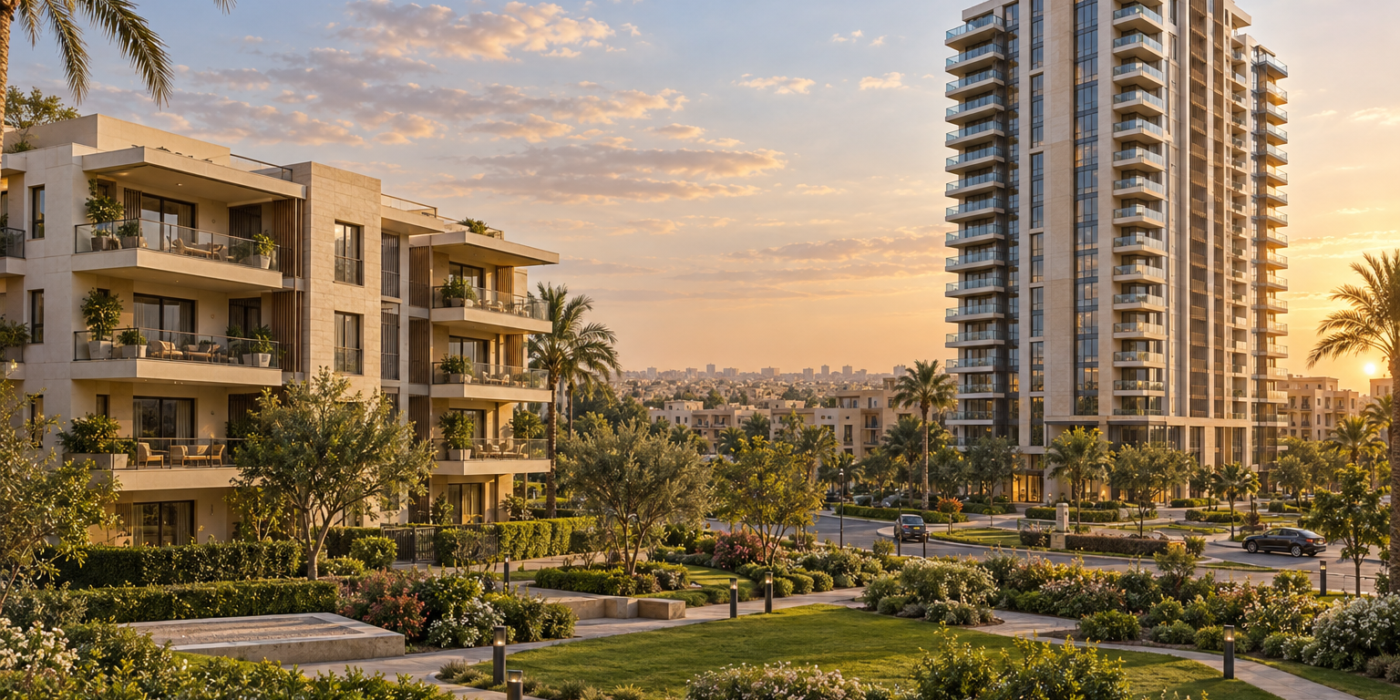
When searching for apartments for sale in Sheikh Zayed, many buyers focus on the unit size, price, and payment plan. However, the height of the building itself can significantly affect everyday living and the property’s long-term value. Living in a low-rise building differs from living in a residential tower in terms of privacy, density, lift dependency, views, operating costs, and ease of access to the unit.
What Are the Main Advantages and Disadvantages to Consider Before Buying an Apartment?
The main advantages of buying an apartment include owning a property that offers stability, may appreciate over time, and could generate rental income. The potential disadvantages include a long-term financial commitment, maintenance and finishing costs, and the possibility of technical defects or legal issues. Buyers should therefore compare the location, price, and payment plan, inspect the apartment, and verify ownership documents and permits before signing the contract.
There is no single option that suits everyone. A family may prefer a low-rise building that offers a quieter environment and less foot traffic, while another buyer may choose a residential tower for its elevated views, central location, or services. This comparison explores the advantages and disadvantages of each option and helps you determine which one is more suitable before buying an apartment in Sheikh Zayed City.
Note: The term “low-rise building” does not refer to a fixed number of floors across all developments. The number may vary depending on the project’s master plan, applicable building requirements, and permits. Always confirm the actual number of floors, units, and lifts in the building you are considering.
What Is the Difference Between a Low-Rise Building and a Residential Tower?
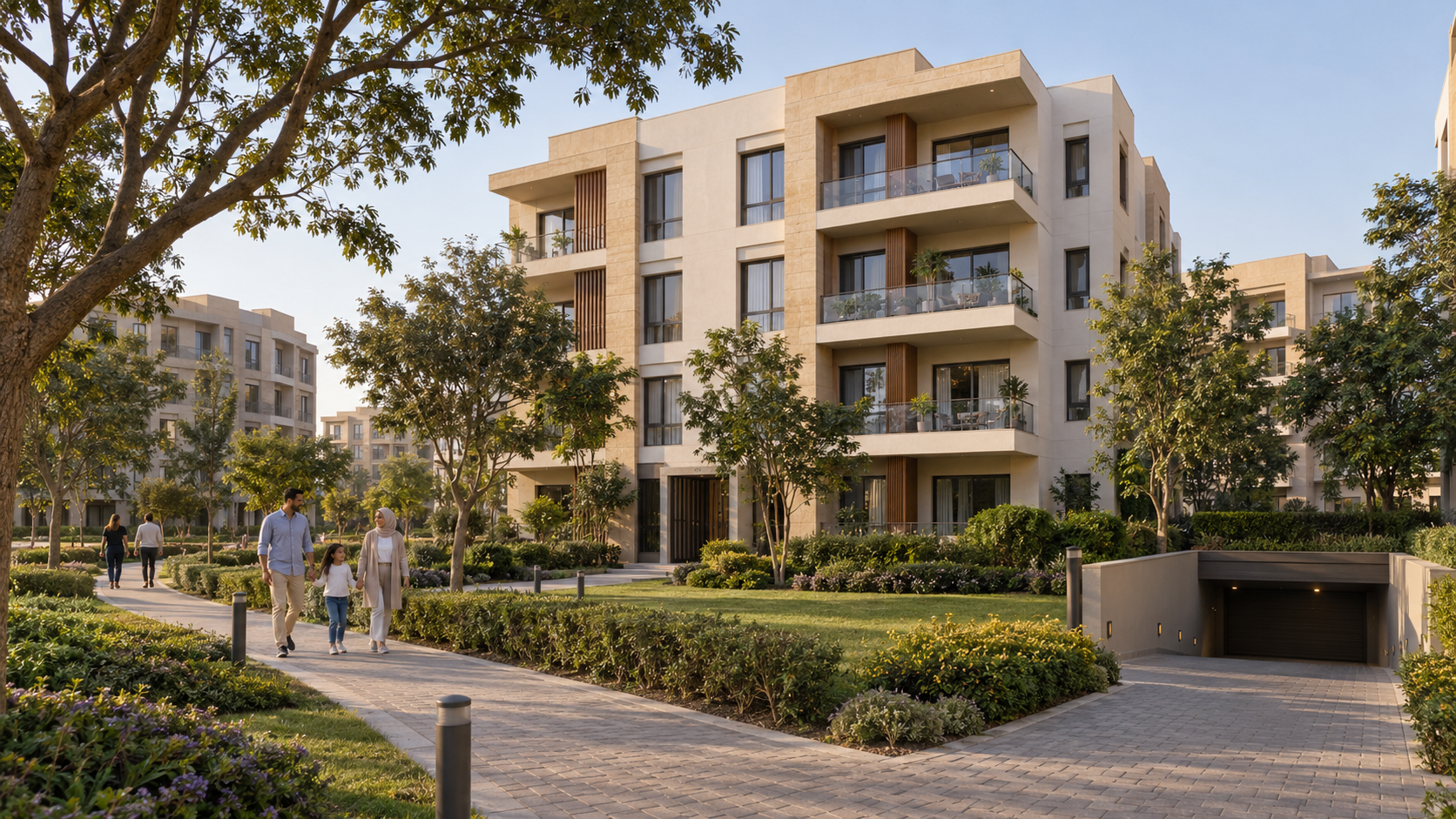
A low-rise residential building typically contains a limited number of floors and apartments. In master-planned communities, this format is often used to distribute homes across several smaller buildings, reduce traffic around entrances and lifts, and create a closer relationship between apartments and landscaped outdoor areas.
A residential tower accommodates more floors and, usually, a larger number of homes within one structure. It relies more heavily on lifts, mechanical systems, fire-safety infrastructure, and professional building management. Upper-floor apartments may enjoy wider views, while shared areas can experience more movement because a larger community uses the same entrance and vertical circulation system.
The real comparison is therefore not simply “short building versus tall building.” It is a comparison between two different living, operating, and ownership experiences.
Low-Rise Building vs Residential Tower: Quick Comparison
| Comparison factor | Low-rise building | Residential tower |
|---|---|---|
| Number of homes | Usually lower | Usually higher |
| Entrance traffic | Often more limited | Can increase at peak times |
| Lift dependency | Lower on accessible floors | Essential on upper floors |
| Typical view | Closer to gardens and community spaces | Wider from higher levels |
| Privacy | Can benefit from fewer neighbours | Depends on homes per floor and layout |
| Noise and movement | Often lower | May be higher around lifts and lobbies |
| Building systems | Generally simpler | More lift and life-safety systems to operate |
| Emergency access | Shorter route from lower floors | Requires robust evacuation planning |
| Older residents and mobility needs | Convenient with the right floor and a lift | Depends heavily on lift reliability and backup systems |
| Resale appeal | Driven by privacy, greenery, and low density | Driven by view, floor, location, and management |
These are general tendencies, not guaranteed outcomes. A well-managed tower may offer a better experience than a poorly maintained low-rise building, and the reverse can also be true.
Advantages of Living in a Low-Rise Building in Sheikh Zayed
1. Lower Residential Density
Fewer apartments can mean fewer residents, visitors, and delivery workers sharing the same entrance, lobby, lift, and parking access. This often appeals to families and buyers who want a calmer residential environment.
However, the number of floors does not reveal the full density. Ask how many apartments are planned on each floor. A four-storey building with many homes per level may feel busier than a taller building with a more efficient layout.
2. Greater Everyday Privacy
A smaller resident population may reduce encounters and waiting times in shared areas. Privacy can improve further when buildings are separated by generous landscaping rather than positioned closely together.
The individual unit still matters. An apartment beside the main entrance or overlooking a busy internal path may experience more movement than another home in the same building.
3. A Closer Connection to Green Spaces
Low-rise communities often bring balconies and windows closer to gardens, pedestrian paths, and internal landscaping. This can appeal to buyers who prefer a garden-facing atmosphere and a sense of connection to the surrounding community rather than a distant city view.
The quality of this benefit depends on actual distances, planting, and orientation. Review the master plan and visit the site instead of relying only on a rendered image.
4. Less Dependence on Lifts
Residents on accessible floors may be able to use the stairs when a lift is busy or temporarily unavailable. This can make frequent trips, deliveries, and everyday movement more manageable.
A lift can still be essential in a low-rise building, particularly for older residents, families with pushchairs, and people with limited mobility. Confirm its availability, capacity, maintenance plan, and power backup.
5. Shorter Emergency Routes
Lower floors generally provide a shorter route to ground level. Nevertheless, building height alone does not determine safety. Buyers should also review fire alarms, firefighting provisions, stair design, emergency exits, and the management plan for the occupied development.
Disadvantages of Living in a Low-Rise Building
1. Less Expansive Views
Buyers seeking a broad skyline or panoramic outlook may not receive the same experience from a limited-height building. A nearby block, mature landscaping, or internal facilities may also restrict the view.
2. Greater Exposure to Ground-Level Activity
Homes near entrances, parking ramps, playgrounds, or internal roads can hear more movement. Orientation and location within the master plan are therefore just as important as the number of floors.
3. Ground-Floor Privacy Requires Careful Assessment
A ground-floor apartment may include a private garden and convenient access, but buyers should review boundary height, pedestrian paths, window exposure, security, drainage, and maintenance responsibilities.
If this unit type interests you, read our guide to choosing a ground-floor unit in Belva before comparing a garden home with a typical-floor apartment.
4. Fewer Homes Do Not Automatically Mean Lower Fees
Building costs may be shared among a smaller group of owners, while a low-density compound can still provide extensive landscaping and community services. Ask for the maintenance deposit, recurring charges, included services, and future increase mechanism rather than assuming a shorter building will always cost less to operate.
Advantages of Living in a Residential Tower
1. Wider Views From Upper Floors
Views are one of the main attractions of high-rise living. Apartments overlooking a park, open land, or a carefully planned urban area may offer a strong visual advantage. A distinctive outlook can also support resale or rental appeal.
Before paying a premium, confirm whether future buildings could obstruct the view. Review the master plan, neighbouring plots, and any available planning information.
2. Efficient Use of a Central Location
Towers accommodate more apartments on a smaller land footprint, which can make them suitable for central locations close to main roads, retail, workplaces, and everyday services. For some buyers, access to the surrounding city matters more than low density inside the building.
3. Centralised Building Services
Modern towers may include reception services, controlled access, cameras, multiple lifts, and professionally managed common areas. These features become valuable only when they remain reliable after handover.
Ask who will operate the tower, how service standards will be funded, and what is included in the annual charges.
4. A Wider Choice of Floors and Price Points
The same tower may offer different prices according to floor, orientation, and view. This allows buyers to select a combination that suits their budget.
Always compare the total purchase price and recurring costs. A quoted price per square metre does not show the full cost of a high-floor or premium-view apartment.
Disadvantages of Living in a Residential Tower
1. Heavy Reliance on Lifts
For upper-floor residents, lifts are fundamental rather than optional. Breakdowns, servicing, or peak-time congestion can directly affect daily access.
Ask how many passenger lifts serve the building, how many apartments they support, whether there is a service lift, and what backup power and maintenance arrangements are in place.
2. More Residents and Shared-Area Traffic
A larger number of apartments can mean more residents, visitors, deliveries, and staff using the lobby, lifts, and parking facilities. Professional management can control this movement, but undersized shared facilities may create delays and congestion.
3. Potentially Higher Operating Costs
Multiple lifts, firefighting equipment, pressure systems, ventilation, security, and large shared areas require ongoing operation and maintenance. Buyers should request a clear explanation of service charges and how they may change over time.
4. More Complex Emergency Planning
High-rise buildings need appropriate fire protection, evacuation routes, alarms, and management procedures. Do not judge safety from the exterior design alone. Request the available technical information and consult an independent specialist when needed.
5. Wind and Heat at Higher Levels
Upper floors can experience stronger winds, while heat and sunlight depend on façade orientation, glazing, insulation, and shading. A high floor does not automatically guarantee better thermal comfort. Review the unit direction and building materials before choosing.
Which Option Is Better for Families?
A low-rise building may suit families that prioritise quieter shared areas, fewer neighbours, proximity to gardens, and simpler access. It can also work well for households with young children or older relatives, provided the chosen floor, lift, and security arrangements match their needs.
A tower may suit families that value a high-floor outlook, a central location, and managed building services, and that are comfortable depending on lifts for daily movement.
Think about the household’s actual routine:
- Do you regularly use a pushchair or mobility aid?
- How many times does the family enter and leave each day?
- Would you like to remain visually close to a garden or children’s area?
- Does waiting for a lift affect your routine?
- Is a panoramic view worth a higher unit price or service charge?
The answers are more useful than assuming one building type is best for every family.
Which Option Is Better for Investment and Resale?
Building height alone does not determine investment quality. The outcome also depends on location, developer track record, execution quality, project management, purchase timing, payment terms, and genuine demand for the unit type.
When Can a Low-Rise Property Appeal to Investors?
- When it is part of a low-density project in a sought-after location.
- When the apartment offers privacy or a green view that is difficult to reproduce.
- When the project attracts families seeking long-term homes.
- When supply is limited and management responsibilities are clear.
When Can a Tower Apartment Appeal to Investors?
- When the tower occupies a central, well-connected location.
- When the apartment has a distinctive and protected high-floor view.
- When lifts, security, and shared areas are professionally managed.
- When rental demand comes from residents who actively prefer vertical living.
To understand the wider market before comparing individual properties, review the latest guide to Sheikh Zayed apartment prices in 2026. Then request a dated quotation for the exact unit, since an area average cannot account for the floor, view, payment plan, or maintenance costs.
Apartments for Sale in Sheikh Zayed: A Practical Comparison Checklist
If you are comparing two apartments in Sheikh Zayed for sale, use the following table rather than focusing on price alone:
| Item to verify | Property A | Property B |
|---|---|---|
| Number of building floors | ||
| Apartments on each floor | ||
| Total homes in the building | ||
| Number and capacity of lifts | ||
| Unit position relative to the entrance | ||
| Orientation and natural light | ||
| Current and possible future view | ||
| Expected noise and movement | ||
| Parking arrangement | ||
| Fire and emergency systems | ||
| Maintenance deposit and recurring fees | ||
| Total purchase price | ||
| Payment schedule and present cost | ||
| Contractual handover date | ||
| Expected rental and resale audience |
You can also use the Sheikh Zayed compounds map for 2026 to compare access routes and project locations before arranging site visits.
Common Mistakes When Choosing Between Low-Rise and High-Rise Living
Choosing a Floor Based Only on the View
A good view does not reveal lift waiting time, façade heat, parking access, or recurring operating costs. If possible, assess the location at different times of day.
Treating Building Height as a Measure of Density
Density depends on the number of apartments, residents, entrances, lifts, and shared facilities—not only the floor count. Ask for clear figures rather than relying on the building’s appearance.
Ignoring Long-Term Operating Costs
Find out what maintenance charges cover, how increases are calculated, and who will manage the building after handover. The annual ownership cost may affect your decision as much as the initial price.
Failing to Review Neighbouring Development
An open view may change if another building is developed nearby. Review the master plan, surrounding land uses, and the information formally included in available documents and contracts.
Relying on General Marketing Language
Terms such as “private,” “low density,” and “panoramic” should be verified at unit level. Check the building number, floor, direction, distance from the next block, and position relative to internal roads and facilities.
Belva: A Low-Rise Residential Example in Sheikh Zayed
Belva Compound in Sheikh Zayed offers a residential concept based on low-rise buildings within an 18.5-acre development. The project includes 21 buildings, with 80% of the site allocated to landscaping and open areas.
Available home types extend from an 86-square-metre one-bedroom apartment to three-bedroom apartments ranging from 171 to 200 square metres, as well as a 267-square-metre three-bedroom duplex.
This variety allows buyers to compare floor, size, orientation, and outlook while considering the wider low-density planning of the community.
Even within one project, every unit should be evaluated separately. A garden-level home provides a different experience from a typical-floor apartment, while each building has its own relationship with entrances, landscaping, and services. Buyers can also review the latest Belva construction stages before making a reservation decision.
Questions to Ask Before Reserving an Apartment
Before buying any Sheikh Zayed real estate, request clear answers to the following:
- How many floors and apartments will the building contain?
- How many lifts are provided, and is backup power available?
- Where is the apartment in relation to the entrance, parking, and facilities?
- What is its orientation, and could the view change in the future?
- What fire alarms, firefighting systems, and evacuation routes are planned?
- What are the maintenance deposit and recurring service charges?
- Who will manage the building after handover?
- Are there any restrictions on renting or using the property?
- What handover date and grace period appear in the contract?
- Have the unit documents and contract been reviewed independently?
Final Verdict: Low-Rise Building or Residential Tower?
Choose a low-rise building if your priorities are fewer neighbours, quieter shared areas, proximity to landscaping, and less dependence on lifts. Consider a residential tower if you prefer a higher view, a central location, and managed shared services—and you are satisfied with its lift capacity, safety systems, and long-term operating plan.
Most importantly, do not make the decision based on height alone. Compare the number of homes, lift provision, orientation, view, maintenance, safety, total price, and expected demand. The right apartment is not automatically in the shortest building or the tallest tower; it is the one that supports your daily routine, budget, and ownership goal.
Find the Right Home for You at Belva
If you are considering an apartment in a low-rise community in Sheikh Zayed, explore the current Belva home types and compare sizes, floors, outlooks, and available payment plans.
Request the latest Belva details and receive an initial recommendation for the unit, floor, and payment plan that best suits your needs.
Discover the Right Home for You at Belva
Request the latest Belva details and receive an initial recommendation for the unit and payment plan that best suit your needs.
Frequently Asked Questions
What Is Considered a Low-Rise Residential Building?
It is a residential building with a limited number of floors compared with a tower. The exact height varies by project and applicable requirements, so buyers should confirm the actual floor and unit count before reserving.
Do Low-Rise Buildings Offer More Privacy?
They may offer greater privacy because fewer homes and residents share the building. The result also depends on the number of apartments per floor, spacing between buildings, and the unit’s position relative to entrances and paths.
Is a Residential Tower Better for Investment?
Not automatically. A high-floor apartment with a distinctive view may attract strong demand, but investment performance also depends on location, management, maintenance, price, and the target rental audience. A scarce unit in a low-density community may be equally or more attractive to some buyers.
What Are the Main Disadvantages of Upper-Floor Living?
Common concerns include dependence on lifts, longer emergency routes, potentially higher operating costs, and greater wind or solar exposure on certain façades. The effect varies according to the tower’s design and management.
What Are the Disadvantages of a Low-Rise Building?
Views may be less expansive, while homes close to ground level can experience more movement from entrances and paths. A smaller floor count also does not guarantee lower maintenance fees.
Is a Ground-Floor Apartment Better Than a High-Floor Apartment?
A ground-floor home can provide a garden and easy access but requires careful review of privacy, security, drainage, and noise. A higher-floor apartment can offer a wider view but depends more heavily on reliable lifts.
How Should I Compare Apartments for Sale in Sheikh Zayed?
Define your priorities, then compare location, size, floor, orientation, unit density, lifts, maintenance, total price, and payment plan. Visit the project and independently review the documents and contract before paying a reservation amount.